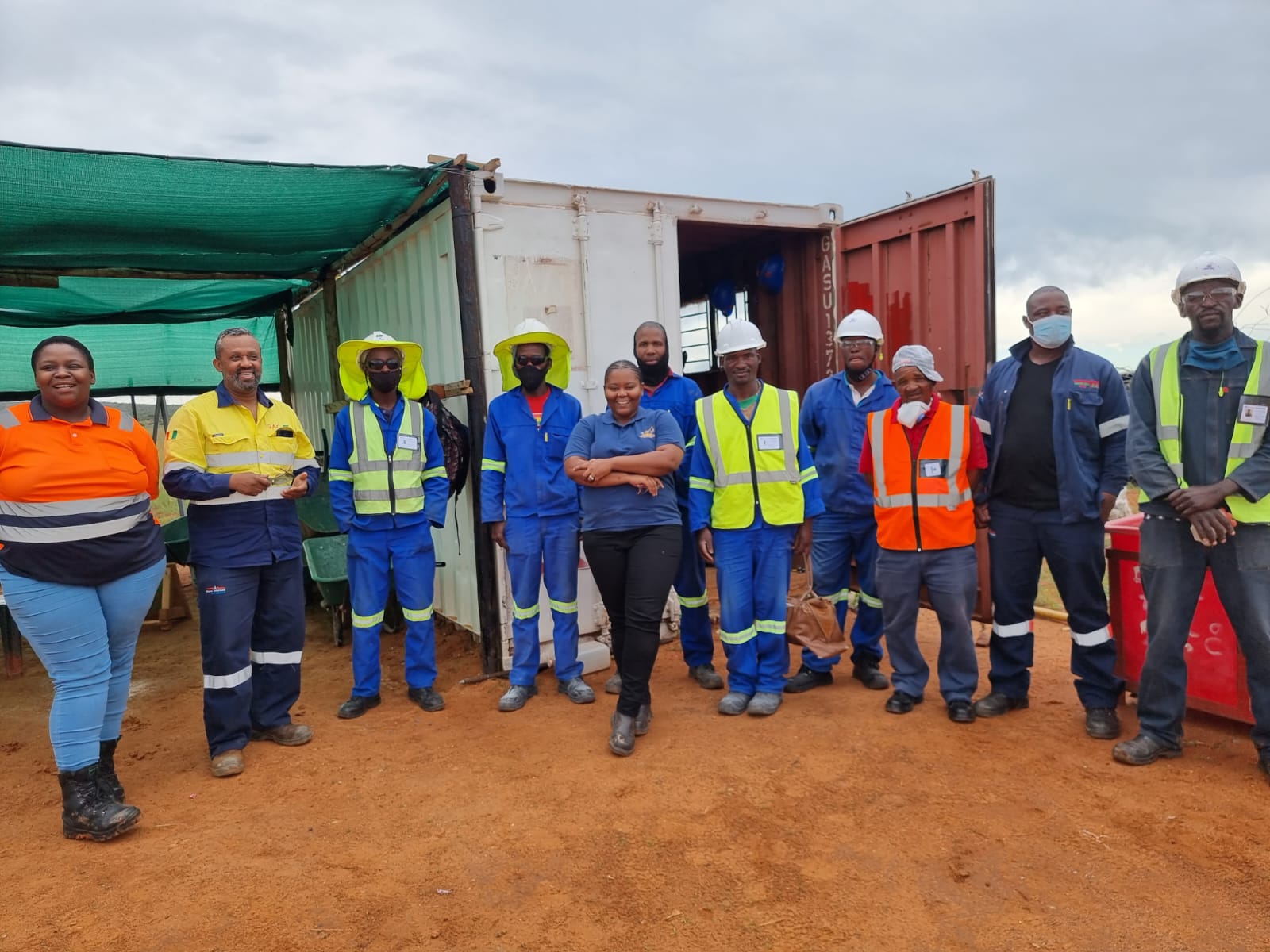
Barely 12 years ago, Sanna Sebone was a newly-qualified quantity surveyor taking her first steps in the largely male-dominated world of construction. Today, her 100% female-owned construction company, Sebongi Construction, is rapidly becoming a force to be reckoned with in the Northern Cape.
Sebone started the company in 2018 using her own funds, and the business has grown to the point where it provides jobs for 179 people. She aims to grow this even further as she pursues her vision of becoming a leading general building and civic works resource in the province, winning what she calls high-value projects.
She won her first project in 2019, and has since successfully completed projects in the mining industry, roads, and earthworks. The company is currently partnering on a solar tower project in the region.
But it hasn’t all been smooth sailing. Sebongi struggled to attract new clients in a highly competitive industry, and while Sebone’s technical knowledge is strong, she admits she needed help with her financial management skills. That’s where the support of Anglo American’s enterprise development arm, Zimele, has been invaluable in helping her take her business to the next level.
Zimele’s involvement has been a massive factor in her business’ development. “We received intensive training and support in financial management, marketing, and growth strategies. They have helped us improve our business management skills immeasurably, and set a blueprint for future growth,” says Sebone
The business experienced 187% growth in revenues during the nine-month training programme at a time when she was also juggling running a business and being a full-time Masters’ student.
Zimele – which means ‘Stand on your own’ in Nguni languages – was established in 1989 to develop emerging black businesses, empower entrepreneurs and support SMME’s with the right tools, skills and networks to grow their businesses. Its model is constantly developing and improving as the landscape of SMME development in South Africa is complex, dynamic very exciting, says Anglo American’s Head of Zimele, Larisha Naidoo.
“We’re fiercely committed to stepping up the pace of change in the SME sectors in which we operate. Sebongi’s success is a great example of how entrepreneur development can drive sustainable local procurement activity – and more importantly, create a lasting impact through skills development, job creation, thriving businesses, and more prosperous communities,” says Naidoo.
Ultimately, says Sebone, Zimele’s intervention has opened her eyes to new opportunities she would never have thought possible. “With Zimele, I can grow the business into what I’ve always dreamed of.”
About Zimele:
Zimele is about creating sustainability in business. It’s focused on building sustainable livelihoods in our host communities and on strengthening relationships to create synergies within Anglo American and with broader mining industry partners.
High levels of unemployment in our country mean that providing funding is simply not enough anymore, so we rolled out a demand-led development programme that mentors entrepreneurs with a focus on youth, supplier, and enterprise development. Based on the needs of smaller businesses, we will support businesses in general business acumen, safety, innovation, and technical capability. Access to funding is also provided as part of our service offering to enterprises from our host communities.
What Zimele does is help create something sustainable for the people living around our mines. It’s there to support them in growing their businesses. This goes hand-in-hand with our new sustainability strategy.
Zimele is playing its part to create jobs and grow small businesses. Our hubs focus on supporting SMMEs and the youth through up-front mentorship, followed by funding opportunities.
For further information, please contact: Lesego Mashigo lesego.mashigo@angloamerican.com Tel: +27 (0)11 638 5134 Cell: +27 (0)73 883 0662
steven
Show SEO & AI-citation metadata for this article
DemoEvery article carries this structured metadata so it surfaces in search and can be cited by AI answer engines. In the back end, a person posting fills these in, or the AI layer drafts them.