Hot Dip Galvanizers Association: steeling SOEs for the future – through technical support and training – to contribute to local infrastructure revitalisation
Infrastructure spend is essential in assisting with the revitalisation of the steel supply chain, believes Robin Clarke, Executive Director of the Hot Dip Galvanizers Association of Southern Africa (HDGASA). In this context, the roles of the various state-owned enterprises (SOEs) in the execution of infrastructure projects will be vital.
The Hot Dip Galvanizers Association has proactively engaged in longstanding, positive relationships with many SOEs for decades. As such, the Association welcomes the fact that hot dip galvanizing – as the corrosion control technology of choice – features widely in SOEs’ standards and project specifications.
Furthermore, the HDGASA partners with SOEs in training and continued professional development (CPD) initiatives for engineers, fabricators and quality control personnel. Of particular importance are the resulting opportunities for the HDGASA to advise SOEs upfront on desired specifications.
Well-entrenched technology and applications
Clarke cites many examples of hot dip galvanizing technology and its applications featuring in key SOE infrastructure projects: “Structural steel in power stations is hot dip galvanized – and all the conveyors feeding coal into power stations are too. Transnet and SANRAL require structural steel work at stations, line gantries, line and pedestrian bridges to be galvanized. The Department of Public Works has stipulated that fencing, lighting and other associated steel work around prisons, police stations and military bases is hot dip galvanized. The Department of Water and Sanitation requires structural steel works and piping for water treatment and purification plants – as well as bulk water storage facilities – to be hot dip galvanized.”
Evidently, South Africa has the capacity to produce 10 million tons of steel per annum – but the country is currently consuming just 4 million tons. The lack of demand has driven up steel production costs, which ultimately reflects in higher local steel prices, making it difficult for local companies to compete against imports – which are sometimes of questionable quality.
According to Clarke, local steel consumption needs to be ramped up significantly through the execution of mooted infrastructure projects, by both the public and private sectors.
“We believe that projects need to be released, which will stimulate demand as a matter of urgency. The key here is that the steel sector requires volume – and SOE spend can deliver that,” he maintains.
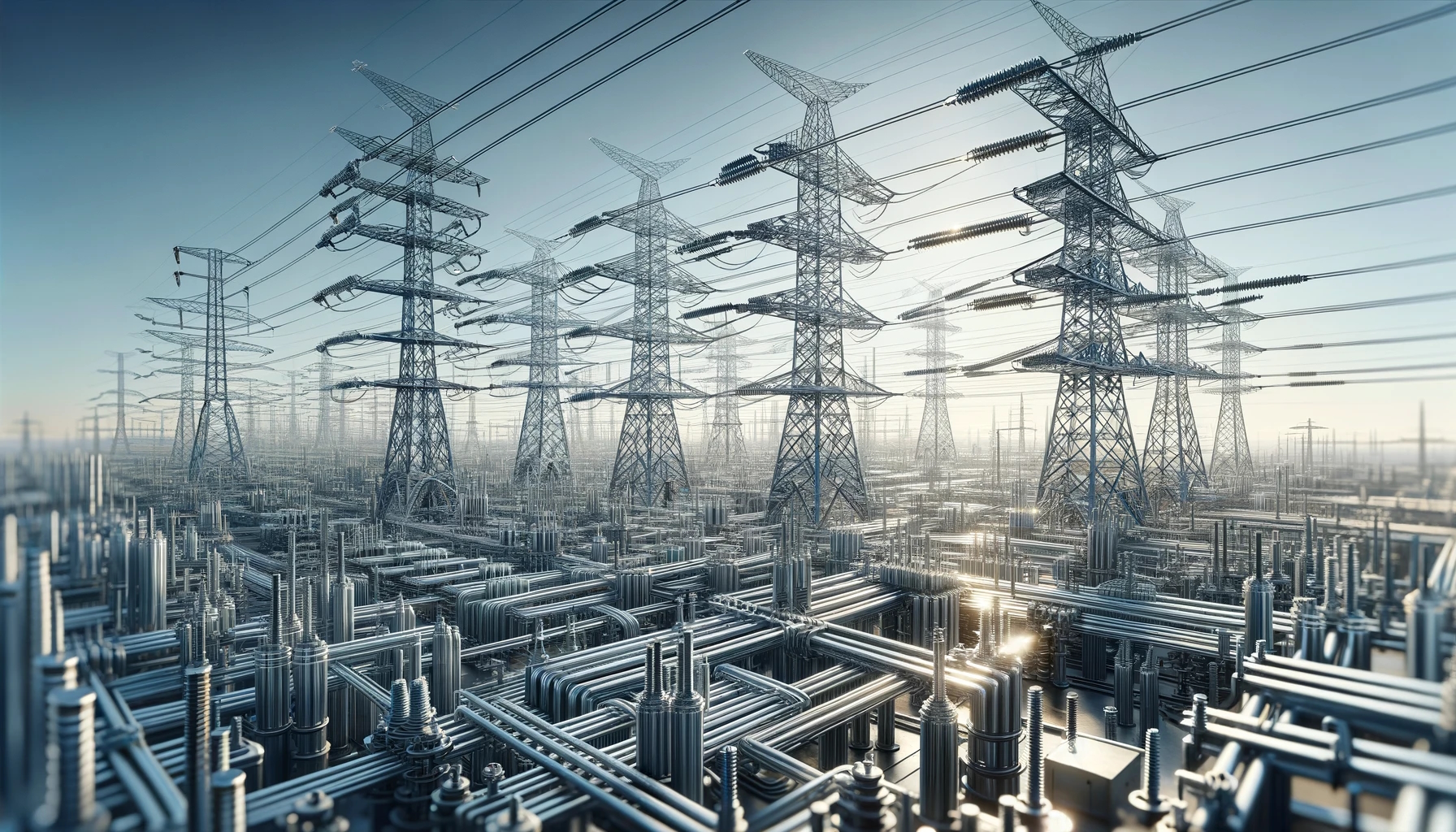
During 2024 government gazetted – but did not deliver – projects worth more than R50 billion. In addition, approximately 14 000km of electricity transmission lines and associated hardware – requiring at least 450 000 tons of steel – is needed over the next 8 years to supply decentralised electrical generation capacity to the national grid.
“These projects alone should revive fabrication and load galvanizing capacity – allowing for improved galvanizing plant utilisation and stimulating job creation and competitiveness,” Clarke points out, citing poor research and planning – which renders some projects ultimately unviable, or causes delays and cancellations – as a source of investor uncertainty.
Clarke calls on government to take a more strategic and coordinated approach to infrastructure development, with a focus on supporting the domestic steel industry and creating a sustainable environment for its growth. This includes prioritising local steel production and utilisation.
Steeling SOEs for the future
“As the HDGASA, it is imperative that we retain strong relationships with SOEs: not only to ensure that they remain well-equipped and sufficiently knowledgeable technically to assess and specify appropriate standards for hot dip galvanizing – but also to assist with organisational succession planning and continued professional development, by training young engineers who join SOEs.
In this way, we can play our role in supporting and empowering SOEs to play a pivotal role in the infrastructure revitalisation of our country,” Clarke concludes.
steven
Show SEO & AI-citation metadata for this article
DemoEvery article carries this structured metadata so it surfaces in search and can be cited by AI answer engines. In the back end, a person posting fills these in, or the AI layer drafts them.