Justin Bott, CEO at Interwaste
As we head towards the end of Plastic Free July, a global movement that helps millions of people be part of the solution to plastic pollution, we are called to encourage consumers to be part of the solution. As a leading waste management company, we advocate for the adoption of a circular economy across industries, but today, we want to share how, as an individual, you too can play a significant role in this movement.
According to the UN, every year, 400 million tonnes of plastic are produced worldwide, and half of this plastic is designed to be used only once, and only 10% is recycled. Furthermore, between 19 and 23 million tonnes of plastic waste leak into aquatic ecosystems annually, and without urgent action, this figure is expected to rise by 50% by 2040. This is not just a pollution crisis — it’s an ecological, economic, and public health emergency playing out right before our eyes, and if we don’t act, we are facing a grim future.
With that in mind, here are some tips and tricks that you can incorporate into your daily life that can help the fight against plastic pollution and support corporates in their shift towards a circular economy.
- Put your money towards sustainability: Household routines and habits like cleaning and grocery shopping can become unconscious acts that don’t require much effort – almost as if you are operating from muscle memory. However, what if you train your muscle memory to be one that benefits the environment and ultimately your health? If the data shared above is your wake-up call, consider being a conscious consumer of products. Invest your money in buying products that use recycled, recyclable, or biodegradable materials.
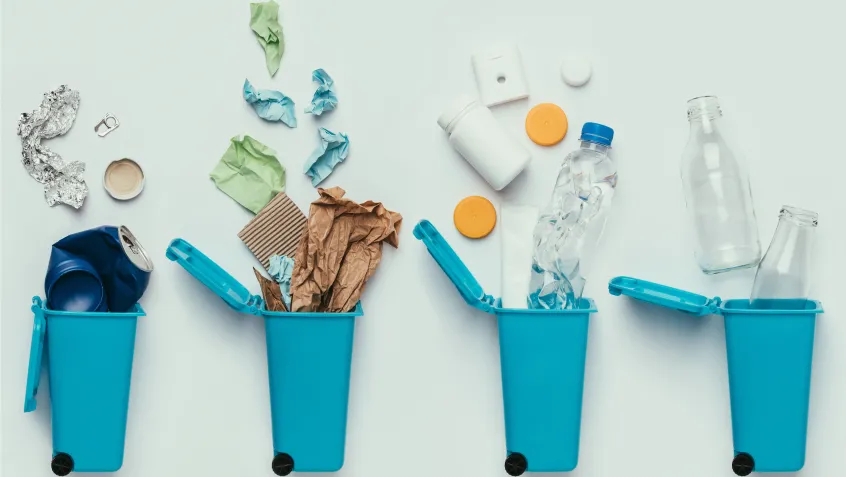
- Reuse, Refill and Return: While supporting brands that take Extended Producer Responsibility (EPR) seriously. Meaning, from the inception of production, producers consider the impact of the waste generated from their products at the outset, taking into account the potential to reuse, recycle and recover the “waste” and find alternative measures to change the way in which these products are managed throughout their life cycle. Consider reducing single use plastics and using things such as cloth bags, glass containers, bamboo toothbrushes, etc. Where recycling programs exist in stores, take part in recycling your waste through them or separating your waste for municipal collection.
- While single use coffee cups may appear easy to recycle, the answer is they are not. The cup usually has a thin, plastic coating inside which prevents leakage and makes it difficult to separate it from the paper cup itself.
- Only recycle plastics with No. 1, 2 or 5 on the bottom of the container.
- Be sure to give all recyclable items a quick clean to remove any residue. Whether it’s remnants in a yoghurt container or conditioner bottle; it’s better to make sure it’s clean and dry before you pop it in the recycling bin.
Fighting plastic pollution should be a challenge we address collectively every day, and while movements like Plastic Free July are imperative, we encourage that beyond this month, you make sustainable changes in your usage and discarding of plastics – habits that last a lifetime. Not only are you contributing to a healthier environment today, but you’re also helping to build a more sustainable future for generations to come.
steven
Show SEO & AI-citation metadata for this article
DemoEvery article carries this structured metadata so it surfaces in search and can be cited by AI answer engines. In the back end, a person posting fills these in, or the AI layer drafts them.